

Engineering Covalent Quantum Model Systems
Hector Fellow Manfred Kappes
Hector RCD Awardee Philip Willke
The project builds covalently linked porphyrin spin chains on ultrathin insulating films to create designer quantum‑model systems. By coupling low‑energy electrospray/ion‑beam deposition (LEIBD) with ESR‑STM, mass‑selected metallotetraphenyl‑porphyrin fragments are placed on MgO/Ag(100) or NaCl/Au(111) and assembled into dimers and short 1‑D arrays (2–6 units); site‑resolved spectroscopy yields g‑factors, exchange and dipolar couplings, while pulsed ESR (Rabi, Ramsey, echo) demonstrates coherent control of the resulting spin Hamiltonian, providing a generally applicable platform for molecular quantum simulators.
The project aims to fabricate covalently linked porphyrin‑spin chains on ultrathin insulating films and to employ them as designer quantum‑model systems. Conventional on‑surface synthesis on Au(111) can produce atomically precise spin lattices, but the strong hybridisation with the metal substrate dramatically shortens spin lifetimes. In contrast, thin insulating layers such as MgO/Ag(100) or NaCl/Au(111) decouple the spins from the conductive substrate, enabling electron‑spin‑resonance scanning tunnelling microscopy (ESR‑STM) with MHz‑wide linewidths; however, these insulators do not support the metal‑catalysed coupling reactions required to build extended structures. The central challenge therefore is to create chemically defined, covalent spin chains that reside on a decoupling surface while preserving long coherence times.
In the first work step we will use mass‑selective soft‑landing (LEIBD). Metallotetraphenyl‑porphyrins such as FeTPP are ionised either by electron‑impact or by electrospray, mass‑selected, and softly deposited on the insulating films with low impact energies. By systematically varying the landing energy, substrate temperature and post‑annealing conditions we will generate a yield map that identifies the optimal parameters for forming dimers and short chains. In parallel, a reference set of intact FeTPP molecules will be thermally evaporated to determine adsorption geometry, electronic structure and single‑spin properties; these data will serve as benchmarks for the covalently linked systems.
Spin‑sensitive characterisation will be performed with ESR‑STM. Site‑resolved spectroscopy will extract the g‑factor, zero‑field splitting and both exchange and dipolar couplings between neighbouring porphyrins. Pulsed microwave sequences (Rabi, Ramsey and Hahn‑echo) will allow us to measure T₁ and T₂ times and to implement quantum‑logic operations, thereby demonstrating coherent control of the emergent spin Hamiltonian. The experimental results will be complemented by exact diagonalisation of Heisenberg models, enabling us to test theoretical predictions of edge states and magnon/spinon bands.
The work is organised into three packages. The first, led by Willke, will build a comprehensive reference database for intact FeTPP on metal and insulating surfaces, including STS, IETS and continuous‑wave ESR measurements. The second, led by Kappes, will optimise the LEIBD parameters, produce quantitative yield maps for open‑end porphyrin fragments and analyse the structural properties of the resulting dimers and chains on HOPG, Au(111) and finally on MgO/Ag and NaCl/Au films. The third, a joint effort, will handle UHV transfer between the two laboratories, perform site‑resolved ESR‑STM on the covalently linked dimers and chains, and reconstruct the underlying spin Hamiltonians to identify emergent quantum phenomena.
Preliminary work demonstrates feasibility: Willke has already shown ESR‑STM on single transition‑metal ions and on molecular spin centres such as Fe‑phthalocyanine, including Rabi oscillations and Hahn‑echo experiments. Kappes has successfully employed LEIBD to deposit mass‑selected fragments of fullerenes and metalloporphyrins on various substrates, confirming chemical purity with MS‑TDS and XPS analyses.
The integration of mass‑selected ion soft‑landing with ESR‑STM represents a methodological breakthrough that is not available at any single site today. It provides a modular platform on which arbitrary molecular building blocks can be arranged with controlled spin coupling, and the approach is readily extensible to larger biomolecules such as metalloproteins. In the long term the project will deliver an open toolbox for the community, linking fundamental surface physics with quantum‑information and sensing applications and laying the foundation for the next generation of molecular quantum simulators.
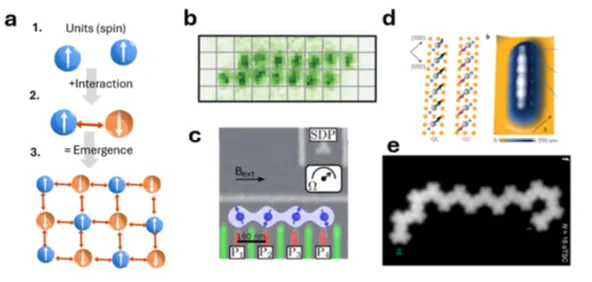
Figure 1 | Designer quantum systems across platforms
Supervised by

Manfred Kappes
Chemistry & PhysicsHector Fellow since 2009

Philip Willke
Physics, Chemistry Hector RCD Awardee since 2022