

Ultra-High Fatigue Life Elastocaloric Microcooling for Photonic Systems
Hector Fellow Prof. Dr. Peter Gumbsch
Hector Fellow Prof. Dr. Juerg Leuthold
Hector RCD Awardee Dr. Jingyuan Xu
Modern photonic systems require precise thermal management to ensure stability and performance. This interdisciplinary project develops a new type of elastocaloric microcooling device capable of operating for more than one million cycles. By combining advanced materials research on shape memory alloy films with innovative device engineering and photonic system integration, the project aims to create a highly efficient solid-state cooling technology. The collaboration between KIT, ETH Zurich, and Fraunhofer IWM addresses key challenges in durability and reliability of microscale cooling technologies for next-generation photonic and neuromorphic systems.
Efficient thermal management is becoming increasingly important as electronic and photonic systems continue to shrink in size while growing in performance. Photonic components such as optical modulators, multiplexers, and integrated circuits are particularly sensitive to temperature fluctuations. Even small local temperature changes can lead to signal degradation, wavelength drift, and reduced efficiency. At the same time, conventional cooling technologies based on vapor-compression systems consume significant energy and rely on refrigerants with high global warming potential.
Elastocaloric cooling offers a promising alternative. This solid-state cooling technology uses stress-induced temperature changes in superelastic shape memory alloys (SMAs) to generate cooling without environmentally harmful refrigerants. Recent advances have demonstrated large temperature changes and high cooling efficiency. Thin-film SMA materials are especially promising for microscale applications because their large surface-to-volume ratio enables rapid heat transfer and compact device integration.
However, current elastocaloric thin-film devices face a major challenge: their limited fatigue life. Many existing systems fail after only a few thousand operating cycles, which is insufficient for practical use in photonic systems that require long-term stability. The goal of this project is therefore to develop an elastocaloric microcooling device capable of operating reliably for more than one million cycles.
To achieve this goal, the project combines expertise from materials science, device engineering, and photonics. The collaboration between Prof. Peter Gumbsch (KIT and Fraunhofer IWM), Prof. Juerg Leuthold (ETH Zurich), and Dr. Jingyuan Xu (KIT) combines this complementary expertise in fatigue mechanics, photonic systems, and elastocaloric microdevices. Together, the partners aim to establish a new class of durable and energy-efficient cooling technologies for next-generation microelectronics and photonic systems.
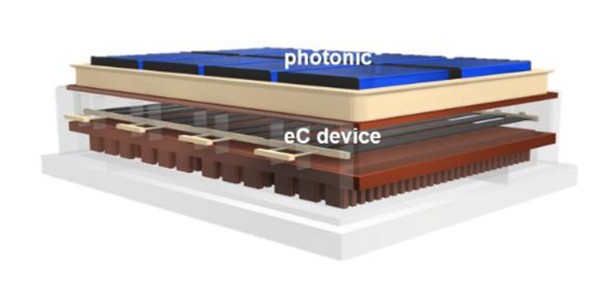
Figure 5. eC device for photonic cooling
Supervised by
Peter Gumbsch
EngineeringHector Fellow since 2008
Jürg Leuthold
Physics & EngineeringHector Fellow since 2010
Jingyuan Xu
Engineering, Energy & Material Engineering Hector RCD Awardee since 2023