Creat­ing the Future
Interdisciplinary Projects

Beyond Retinal: Machine Learn­ing Models for Photo­chem­i­cal Control in Rhodopsins

Hector RCD Awardee Prof. Dr. Carolin Müller
Hector Fellow Prof. Dr. Klaus Robert Müller
Hector Fellow Prof. Dr. Peter Hegemann

The project is developing a machine learning framework to accurately predict the excited states of rhodopsins. To this end, a dataset of quantum chemical calculations on retinal derivatives in protein-like environments is being compiled and used for model training. The models are validated and refined through the repeated synthesis and spectroscopic analysis of specifically designed rhodopsin variants. The goal is to create a data-driven platform for the rational design of light-sensitive proteins and the accelerated development of new photoreceptors.

© Pter - Adobe Stock

Ultra-High Fatigue Life Elastocaloric Micro­cool­ing for Photonic Systems

Hector Fellow Prof. Dr. Peter Gumbsch
Hector Fellow Prof. Dr. Juerg Leuthold
Hector RCD Awardee Dr. Jingyuan Xu

Modern photonic systems require precise thermal management to ensure stability and performance. This interdisciplinary project develops a new type of elastocaloric microcooling device capable of operating for more than one million cycles. By combining advanced materials research on shape memory alloy films with innovative device engineering and photonic system integration, the project aims to create a highly efficient solid-state cooling technology. The collaboration between KIT, ETH Zurich, and Fraunhofer IWM addresses key challenges in durability and reliability of microscale cooling technologies for next-generation photonic and neuromorphic systems.

Anna

© Anna - Adobe Stock

Engineer­ing Covalent Quantum Model Systems

Hector Fellow Manfred Kappes
Hector RCD Awardee Philip Willke

The project is developing covalently linked porphyrin spin chains on ultrathin insulators to create designer quantum model systems. Using low-energy electrospray ion beam deposition (LEIBD), mass-selected metal-tetraphenylporphyrin fragments are selectively deposited onto MgO/Ag(100) or NaCl/Au(111) substrates and linked into short 1-D chains (2–6 units). Using ESR-STM and pulsed ESR techniques (Rabi, Ramsey, Echo), the g-factor, exchange, and dipole couplings are determined and the spins are coherently controlled, creating a versatile platform for molecular quantum simulators.

© Peter Jurik - Adobe Stock

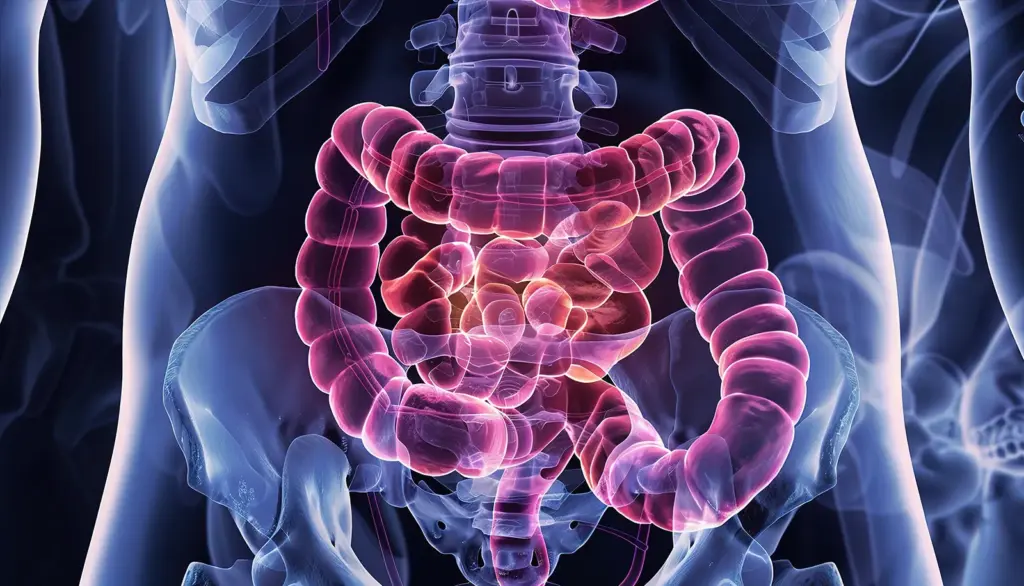
PRECISE-CRC: PREven­tion through Causal Infer­ence and Strat­i­fied Embed­dings in ColoRec­tal Cancer

Hector Fellow Bernhard Schölkopf
Hector RCD Awardee Carolin Schneider

PRECISE CRC is developing an embedding-based system that transforms heterogeneous lifestyle and healthcare data from biobanks into structured patient summaries using a context-specific large language model (LLM), embeds these into latent vectors, and identifies true causal risk factors for colorectal cancer using advanced causal methods to identify true causal risk factors for colorectal cancer.  

© 程 加星 - Adobe Stock

Visual percep­tual learn­ing after a transient phase of congen­i­tal blind­ness: Neural mecha­nisms of sight recovery

Hector Fellow Brigitte Röder
Markus Becker - Hector RCD Awardee Sebastian Frank
Hector Fellow Eberhart Zrenner

This project aims to elucidate the neural mechanisms underlying vision recovery through visual perceptual learning in patients treated for congenital blindness. Led by Dr. Sebastian Frank, Prof. Dr. Brigitte Röder and Prof. Dr. med. Dr. h.c. mult. Eberhart Zrenner, in collaboration with the LV Prasad Eye Institute, the study uses MRS and EEG to assess changes in excitation and inhibition. The goal is to bridge neuroscience, psychology, and ophthalmology to improve rehabilitation strategies, deepen a comprehensive understanding of visual plasticity, and advance treatments for visual impairments.

Crane Design

© Crane Design - Adobe Stock

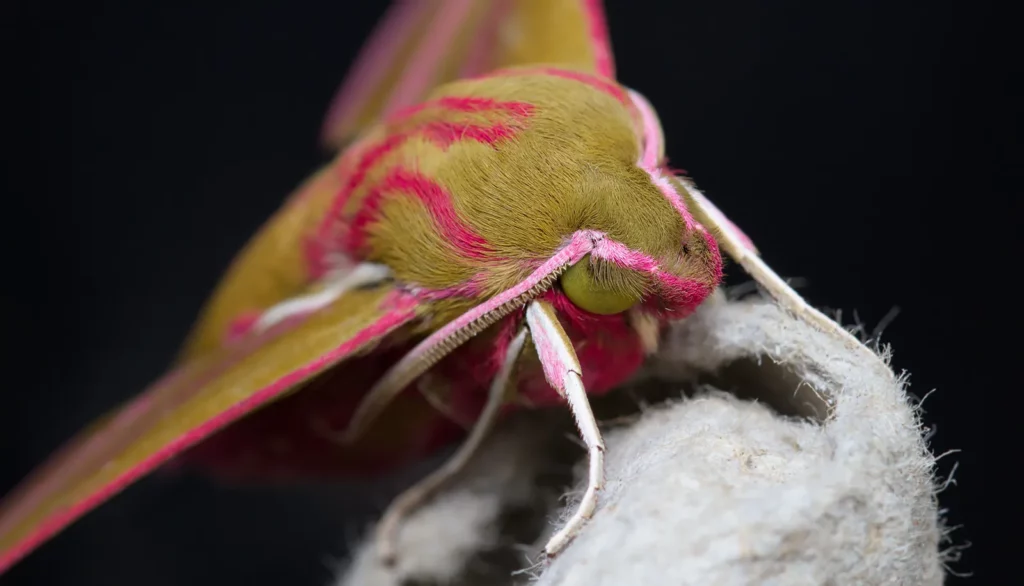
Living in night and day: genomics of light adapta­tions in moths as cater­pil­lars and adults

Hector RCD Awardee Anna Stöckl
Hector Fellow Axel Meyer

This project, led by Jun.-Prof. Dr. Anna Stöckl and Prof. Dr. Axel Meyer (University of Konstanz), investigates how moths adapt to artificial light at night. By combining genomics, neuroanatomy and behavioral studies, the team aims to elucidate the mechanisms of sensory plasticity during metamorphosis. Using transcriptomics, epigenetics, and behavioral analysis, the research will investigate how caterpillar light exposure affects adult moths. The results will provide critical insights into animal adaptation to human-induced environmental change and shape future ecological and evolutionary studies.

© Martin - Adobe Stock

Unrav­el­ing univer­sal mecha­nisms of viral replication

Hector Fellow Ralf Bartenschlager
Dr. Leonard Bäcker - Hector RCD Awardee Tessa Quax

This project, led by Prof. Dr. Dr. h.c. Ralf Bartenschlager (University of Heidelberg) and Prof. Dr. Tessa Quax (University of Groningen), investigates whether archaic viruses form specialized replication compartments, a strategy that has already been demonstrated in bacterial and eukaryotic viruses. By combining structural biology, cell biology, medicine, and chemistry, the goal is to identify universal mechanisms of viral replication. Using advanced imaging, genetic labeling, and lipid analysis, the viral replication process in archaea will be studied and compared to other life forms. The results will provide new insights into the evolution of viruses and identify potential approaches for antiviral therapies. In addition, young scientists will be trained in interdisciplinary virology to promote virus research in different biological areas.

© catalin - Adobe Stock

Electrophilic Reactiv­ity Provid­ing Well-Defined Helically Chiral Gold(III) Catalysts for the Asymmet­ric Synthe­sis of Bioac­tive Compounds

Hanock Baiju - Hector RCD Awardee Agnieszka Nowak-Król
Hector Fellow A. Stephen K. Hashmi

The aim of the project led by Hector RCD Awardee Agnieszka Nowak-Król (University of Würzburg) and Hector Fellow A. Stephen K. Hashmi (Heidelberg University) is to develop well-defined helically chiral gold(III) complexes, the first examples of helically chiral gold complexes with gold atoms on either an outer or an inner helicene rim. The catalytic potential of these unprecedented complexes and their practical utility will be demonstrated in the enantioselective synthesis of small organic compounds and biologically or pharmaceutically relevant targets, i.e. natural products and pharmaceutically active compounds.

© kitipol - Adobe Stock

RetinaSen­sor: Enhanced Vision Restora­tion in Blind People

Dr. Wadood Haq (Alumni) – Hector Fellow Eberhart Zrenner
Shadi Nashashibi – Hector Fellow Jürg Leuthold
Marina Homs - Hector Fellow Jürg Leuthold

In this project the Hector Fellows Jürg Leuthold and Eberhart Zrenner are working together with the HFA Postdoc Dr. Wadood Haq (Eberhard Karls University, Tübingen) and doctoral students Shadi Nashashibi (ETH Zurich) and Marina Homs (ETH Zurich) towards the next generation of retinal implants. By combining highly sensitive photodetectors with a microelectrode array operating under a new stimulation paradigm, the RetinaSensor will enable previously unachieved spatial and temporal resolution in electric retinal implant technologies.

© Aliaksandra - Adobe Stock