New Doctoral Positions in Biology, Medicine, and the History of Science
Apply Now Until October 15!


Apply Now Until October 15!
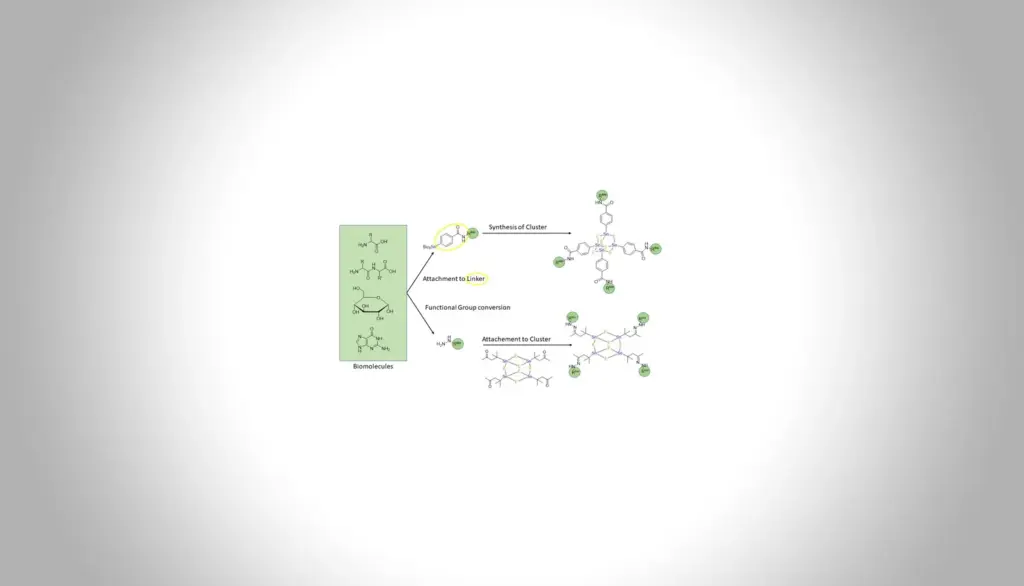
The cytotoxicity of organic tin compounds makes them interesting for cancer chemotherapy. Organotin chalcogenide clusters release under acidic decomposition not only an organic tin compound but also an even more toxic hydrogen chalcogenide. To enable biocompatibility of those clusters, they must be derivatized with biomolecules. This project aims to synthesize biofunctionalized organotin chalcogenide clusters and to investigate their decomposition behavior.
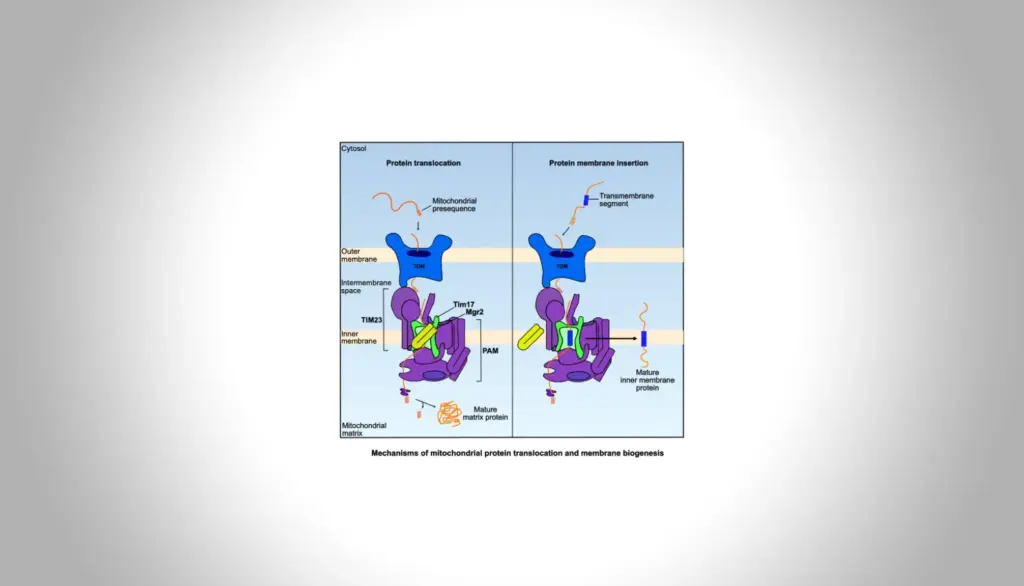
Mitochondrial protein import is mediated by the presequence translocase of the inner membrane (TIM23 complex). While Tim17 is central for inner membrane translocation, the exact role of Mgr2, a small transmembrane protein, remains unclear. This project aims to define the function of Mgr2 in precursor protein import, membrane insertion, and translocase stability using genetic, biochemical, and structural approaches.
Support for Ambitious Young Researchers on the Path to a Professorship
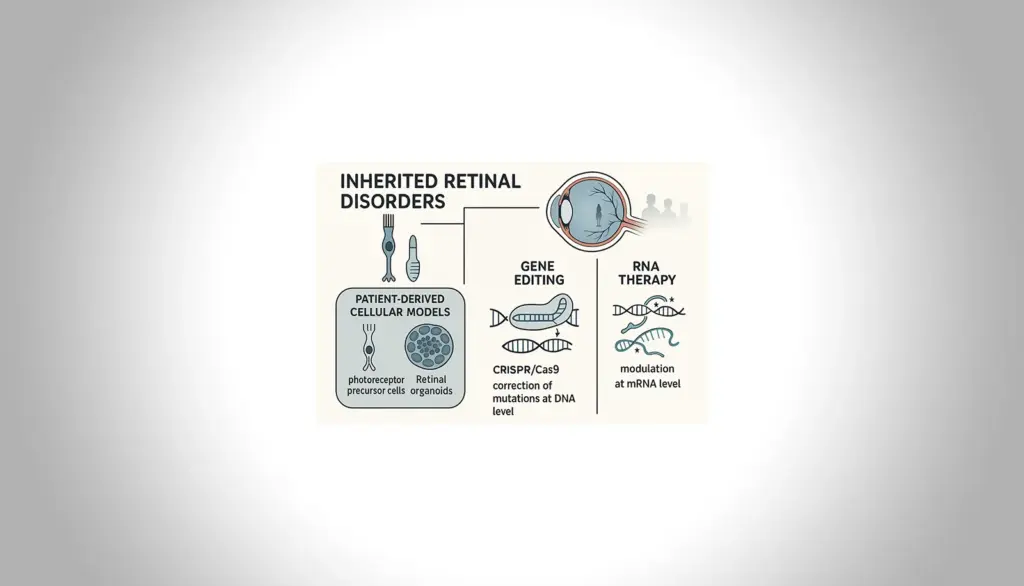
Vision loss from inherited retinal diseases is caused by faulty genes. My research uses cutting-edge tools—like CRISPR and RNA therapies—to fix or silence mutations in genes such as RHO, USH2A, and ABCA4. These treatments are tested in advanced patient-derived models, including iPSC-derived retinal cells, with the goal of developing safe, effective therapies ready for clinical translation.
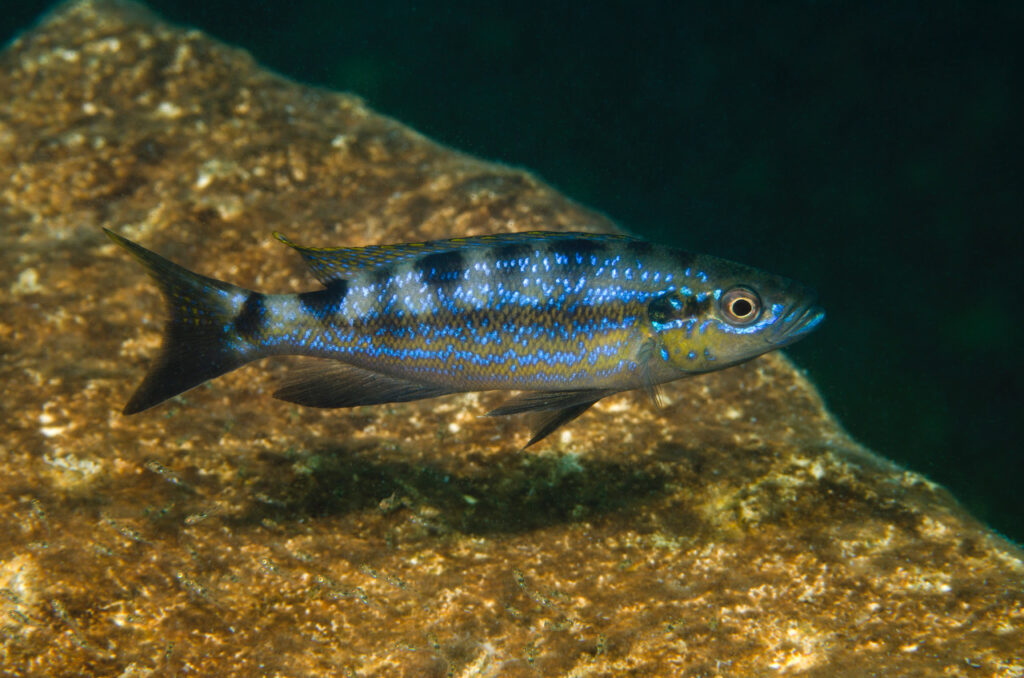
Insights into the genetic basis of bilateral head asymmetry in a scale-eating cichlid fish Xiaomeng Tian, Young Researcher of the Hector Fellow Academy, is first author of the paper “Insights into the genetic basis of bilateral head asymmetry in a scale-eating...
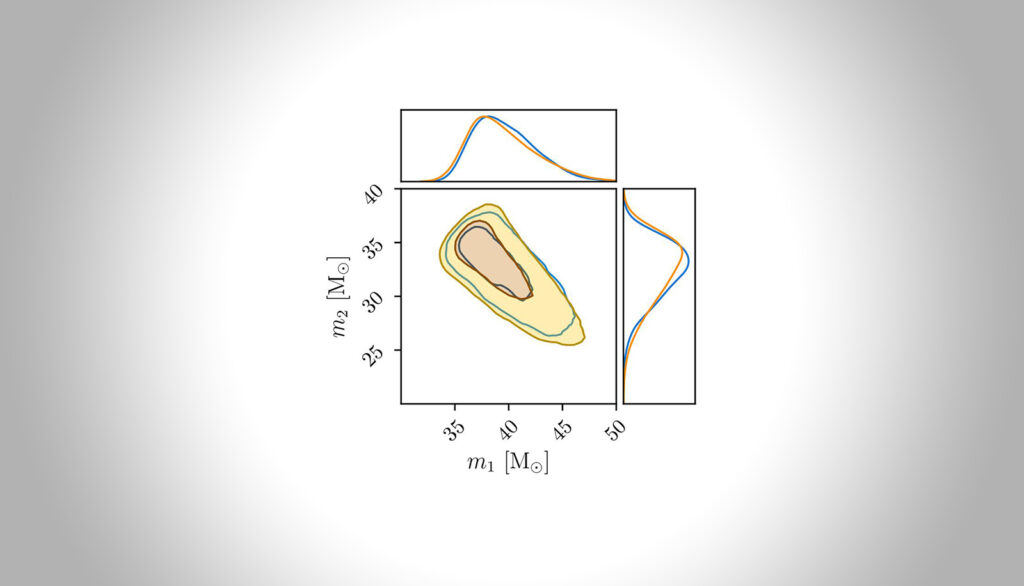
The detection of gravitational waves (GWs) has opened a new window on the universe, through which we can study the physics of black-hole and neutron-star mergers. By analyzing GWs we can infer properties of the corresponding astrophysical systems. Current analysis methods are however too computationally expensive to deal with the growing amount of data. My research is thus concerned with the development of more efficient methods for the GW analysis using powerful machine learning methods.
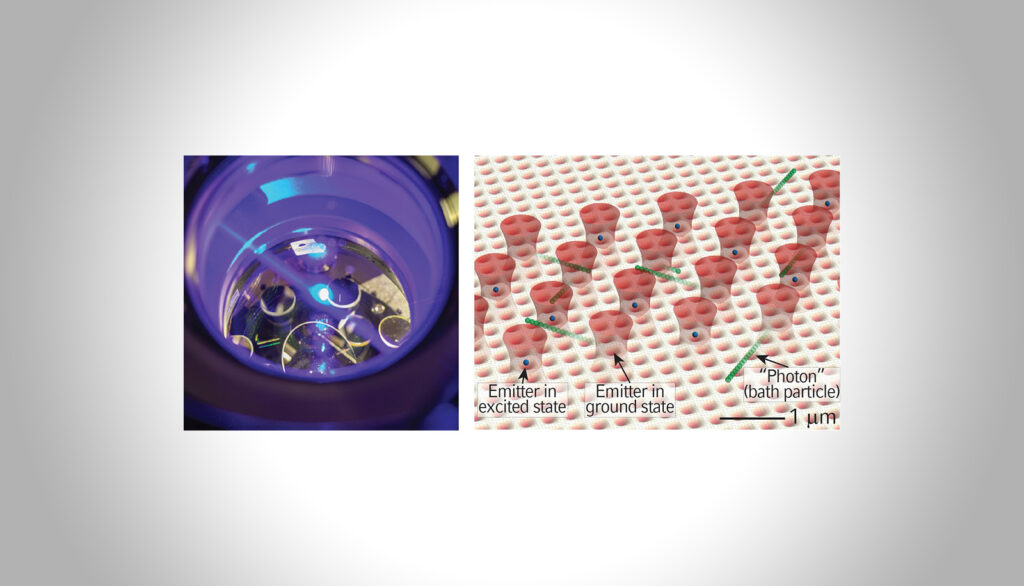
The central paradigm of quantum optics is the absorption and emission of radiation by quantum emitters. When the coupling between an emitter and its environment becomes strong, intriguing radiative properties can be engineered, such as directional emission patterns or strongly modified emission rates. This project aims at accessing such effects in a system of ultracold atoms in optical lattices where artificial emitters decay by emitting matter waves rather than optical radiation.
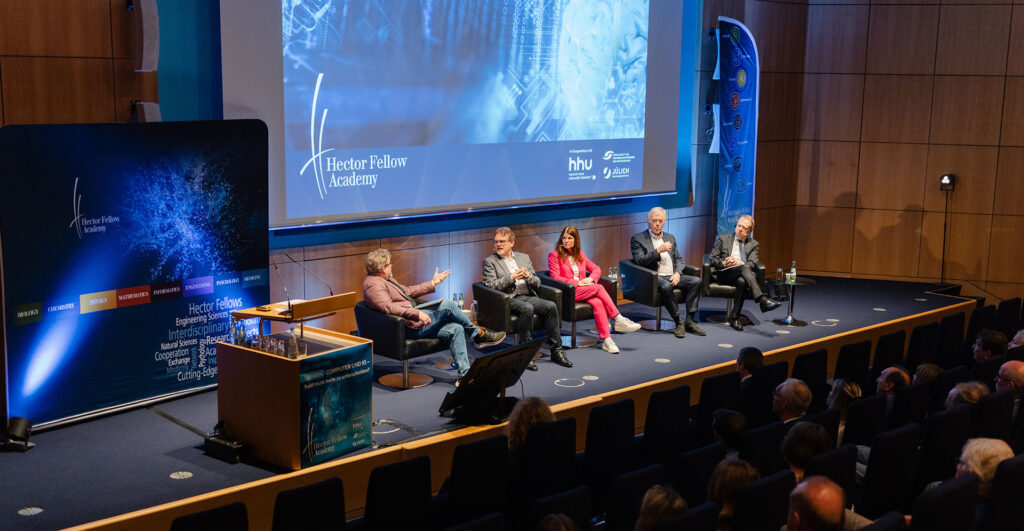
Recording of the Event Now Available on YouTube The 10th Science Evening of the Hector Fellow Academy took place on July 10, 2025, at the K20 Museum in Düsseldorf and was streamed live online. The event was organized in cooperation with Heinrich Heine University...
Science Evening 2026