Highly Cited Researchers 2023
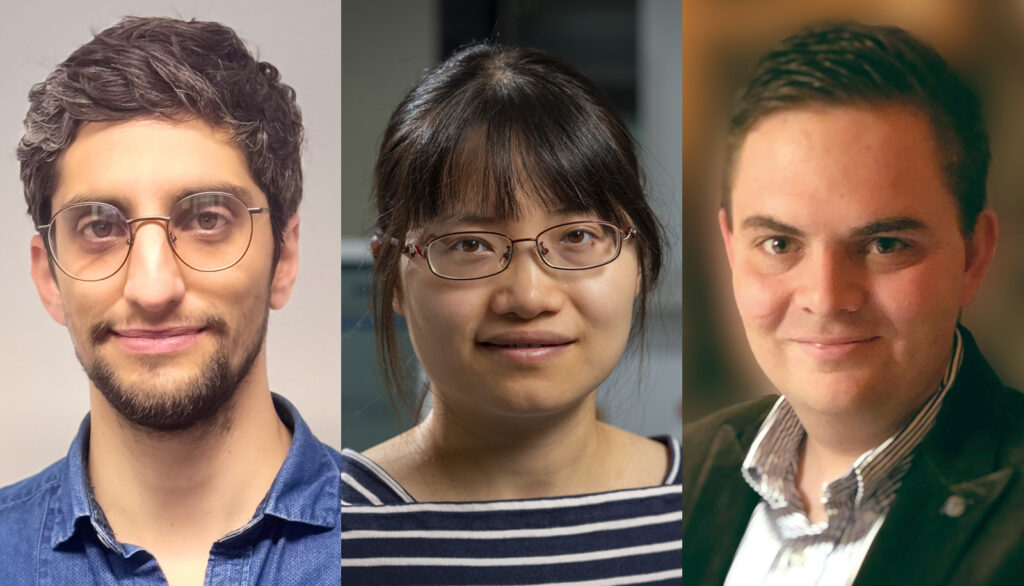
Recognition for HFA members Ralf Bartenschlager, Immanuel Bloch, Patrick Cramer, Christoph Klein and Dylan Nelson
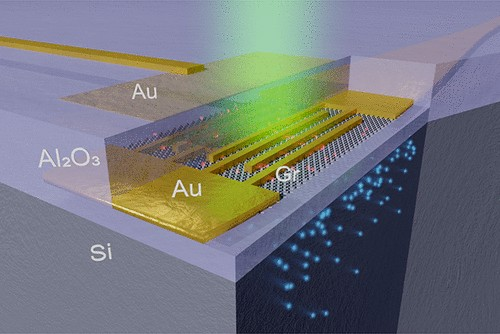
Multiplexed Optogenetics with organic light-emitting diodes (OLEDs)
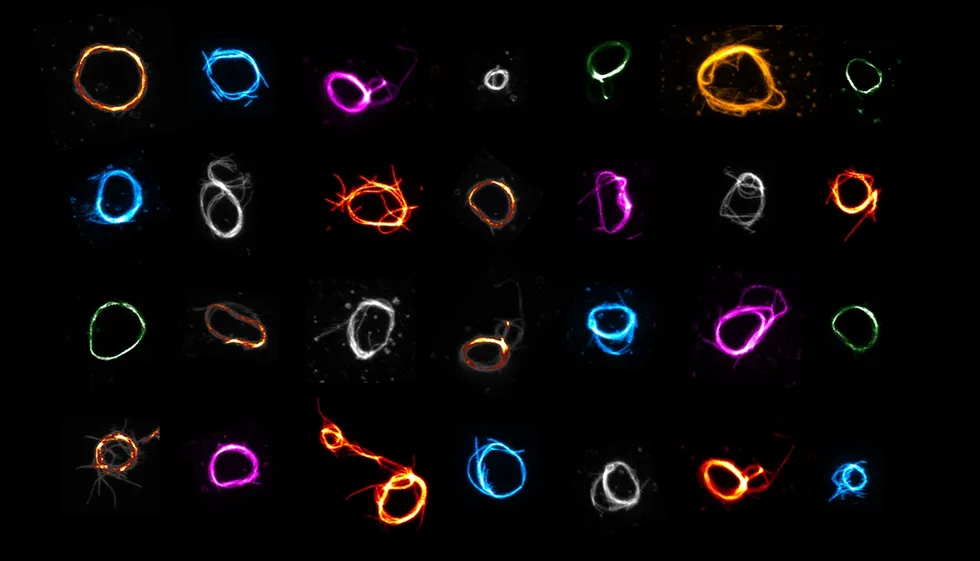
A Deep Look into Dark Matter
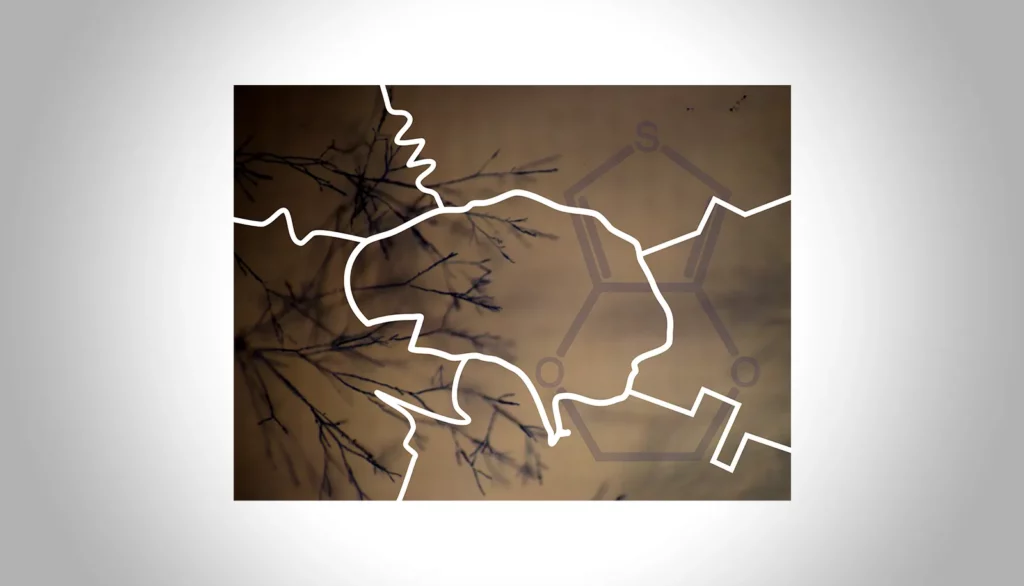
π-Extended carbazoles exhibit intriguing electronic and optical properties that make them attractive for diverse applications such as OLEDs, OFETs, and solar cells. In this project, new methods for the synthesis of these N-heterocycles will be explored and their application as organic materials will be intensively investigated.
This autumn, the Hector Fellow Academy welcomes ten new doctoral students
Insects face a wide range of light intensities, which gradually change throughout the daily cycle, and suddenly change between celestial conditions or habitat types. To understand how insects extract relevant information from such dynamic visual scenes, it is necessary to study both sensory processing and behaviour, which influence each other reciprocally. To disentangle this closed-loop, I am studying three key-stages: (i) adaptive behaviour, (ii) natural inputs, and (iii) sensory processing.
Human brains and vision-based robotics require intensive computation to recognize visual pattern features in various contexts and augmentations, known as invariant pattern recognition. The hummingbird hawkmoth (Macroglossum stellatarum) similarly uses pattern features on flowers to select suitable foraging sites, with only a fraction of the ‘computational power’. Aiming to understand how they do so with such efficiency, we will use behavioural, neural, and computational methods to uncover the algorithmic basis of (invariant) pattern recognition in insect pollinators.
In a spacetime we have one time dimensions and multiple space dimensions. In our reality we experience three space-like dimensions. Now in differential geometry, nothing keeps us from considering manifolds with multiple time-like dimensions. In this project we study algebraic structures, in particular the group SO(p,q), which describe the dynamics and the geometry of so-called pseudo-Riemannian hyperbolic spaces with at least one time dimension.
Japan Society of Applied Physics honors outstanding research on the fundamentals and applications of micro-optics